
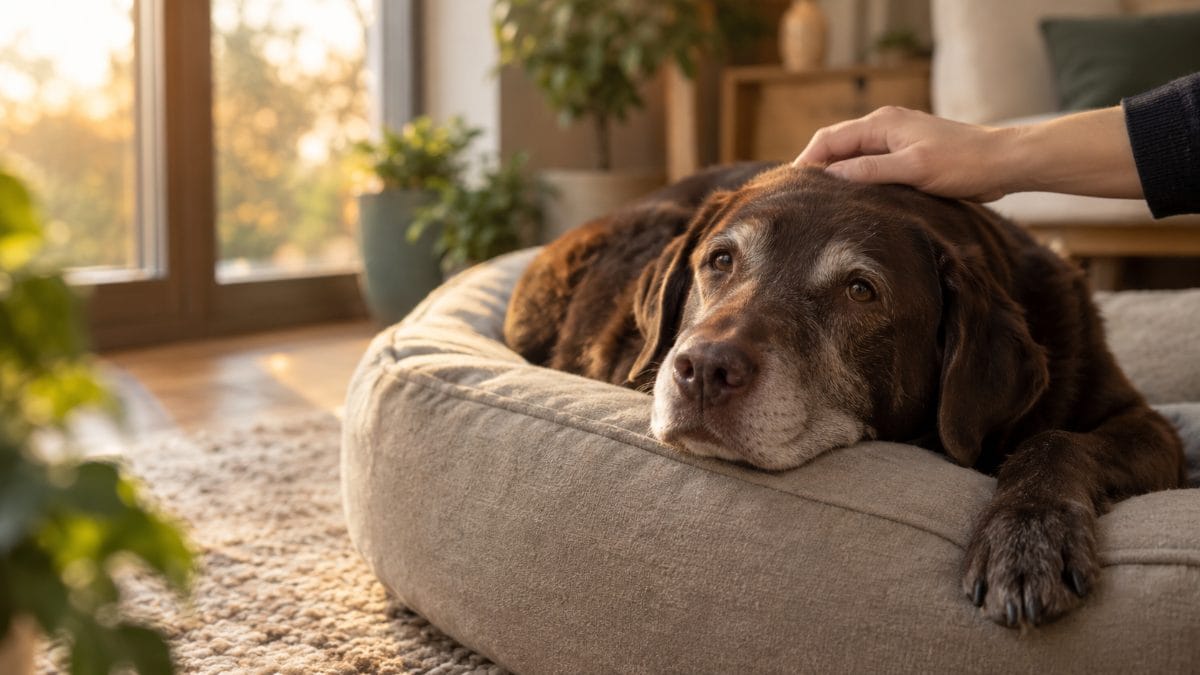
One day you notice it: the grey around his muzzle has spread, he waits a moment before jumping into the car, and the morning walk has quietly become shorter. Nothing is wrong, exactly. Your dog is simply getting older, and knowing how to care for a senior dog well can make these years some of the most rewarding you share.
Older dogs need a few things done differently: more frequent checkups, a diet that fits a slower metabolism, gentler exercise, and a home that is easier to move around. This guide brings it all together in one place, with a checklist you can return to and clear signs that mean it is time to call your vet.
Quick Answer: How to Care for a Senior Dog
To care for a senior dog, book vet checkups about every six months, keep him lean with a diet suited to his age and health, and keep him moving with short, regular walks. Add dental care, a supportive bed, non-slip floors, and daily mental games. Watch for changes in appetite, sleep, mobility, or behavior, and report them early, because many age-related problems are easier to manage when caught soon.
Why Senior Dog Care Is Different
Most dogs are considered seniors somewhere between 7 and 11 years old, depending on their size. Large and giant breeds age faster than small ones, so a Great Dane may be a senior years before a Chihuahua. If you are not sure where your dog falls, our guide to when a dog is considered a senior breaks it down by size.
With age, metabolism slows, muscle mass drops, joints stiffen, and the senses fade. Organs such as the kidneys, liver, and heart may work less efficiently, and the brain changes too. Many of these changes happen slowly and quietly, which is why older dogs often hide problems until they are well advanced.
The good news is that small, consistent habits make a real difference when you care for a senior dog. Regular checkups catch problems early, the right diet protects joints and organs, and a little daily effort keeps body and mind active. The sections below cover each area in turn.
The Essentials of Senior Dog Care
1. Schedule vet checkups about every six months
A year is a long time in the life of an older dog. Many vets recommend wellness exams every six months for dogs over seven, even when they seem healthy. These visits usually include a full physical exam, a dental check, a weight and diet review, and questions about behavior at home.
Your vet may also suggest screening tests: blood work to check the kidneys, liver, and blood cells, a urine test, a thyroid test, and a blood pressure reading. Results from a healthy year also give your vet a baseline, which makes later changes much easier to spot.
2. Feed for the dog in front of you
Older dogs usually need fewer calories but still need high-quality protein to protect their muscles. Some do well on a senior formula, while others with kidney, heart, or digestive issues need a diet chosen with their vet. There is no single best senior food, and age alone is not a reason to switch.
Weight matters more than almost anything else. In a 14-year study of Labrador retrievers, dogs kept lean lived about two years longer than their heavier littermates and developed osteoarthritis later. Weigh your dog every month or two, and ask your vet to show you how to check his body condition by feeling his ribs and waist. If your dog’s appetite drops, our guide on what to do when a senior dog stops eating explains the common causes.
3. Keep him moving, gently
Exercise keeps joints flexible, muscles strong, and weight in check. Most senior dogs do better with two or three short walks a day than with one long outing. Let your dog set the pace, allow plenty of time to sniff, and avoid hard jumping or sudden sprints.
Stiffness after rest, slowing down on walks, or hesitation at stairs often point to arthritis. Our guide on helping a senior dog with stiff legs covers practical changes at home, and our comparison of joint supplements for older dogs explains which ingredients have the most research behind them.
4. Don’t skip dental care
Dental disease is one of the most common health problems in older dogs. Painful teeth can make a dog eat less, chew on one side, or drop food, and infection in the mouth can affect the rest of the body. Your vet will check the teeth at each visit and may recommend a professional cleaning under anesthesia.
At home, daily brushing with a dog toothpaste is the gold standard. If your dog will not tolerate a brush, look for products with the seal of the Veterinary Oral Health Council (VOHC), which shows they have been tested to reduce plaque or tartar. Virbac C.E.T. VEGGIEDENT FR3SH chews carry that seal and come in sizes for small to large dogs. Choose a size that matches your dog’s weight, and supervise chewing if your dog tends to gulp.
5. Make your home senior-friendly
Slippery floors, steep stairs, and high furniture become real obstacles as joints stiffen and eyesight fades. A few changes help a lot: rugs or runners with non-slip backing on hard floors, a ramp or steps for the car and sofa, and baby gates at the top of the stairs if your dog is unsteady.
A supportive bed takes pressure off sore joints and helps older dogs sleep more comfortably. An option such as this memory foam orthopedic bed for large dogs spreads your dog’s weight evenly and supports the whole body. Place it somewhere warm and draft-free, away from busy doorways. Night lights in hallways also help dogs whose eyesight is fading.
6. Keep the mind busy
Mental stimulation matters as much as physical exercise. Short training sessions with familiar cues, scent games, and food puzzles keep an older dog engaged and may help slow some signs of cognitive aging. A beginner puzzle like the Outward Hound Nina Ottosson Dog Brick lets your dog work for part of a meal.
If you notice confusion, getting stuck in corners, or changes in how your dog sleeps or greets you, read our guide to the signs of cognitive decline in senior dogs and talk to your vet. Our article on dog dementia supplements explains which options have research behind them.
7. Watch sleep and behavior
Older dogs naturally sleep more, but a sudden change in sleep, new restlessness at night, or a dog who seems withdrawn can point to pain, illness, or cognitive changes. Our guide on why a senior dog sleeps so much explains what is normal and what is worth a closer look.
Behavior changes are often the first sign of pain in older dogs. Irritability when touched, licking a joint, panting at rest, or reluctance to lie down can all mean your dog is uncomfortable.
8. Groom and check his body regularly
A weekly brushing session doubles as a health check. Run your hands over your dog’s body and note any new lumps, sore spots, or changes in the skin and coat. Most lumps in older dogs are harmless, but only your vet can tell, so point out anything new or growing.
Keep nails short. Long nails change the way a dog stands and make it harder to grip the floor, which matters even more for a dog with weak or stiff legs. Check the ears and eyes too, since infections and cloudiness become more common with age.
9. Plan for comfort and quality of life
As your dog gets older, it helps to think ahead. Ask your vet how to recognize pain, what a good day and a bad day look like for your dog, and how you will judge quality of life if he develops a long-term illness. Many owners find it easier to make calm decisions when they have talked these questions through early.
A Simple Senior Dog Care Checklist
Use this checklist to care for a senior dog week by week, and bring it to your next vet visit if anything has changed:
| Area | How often | What to do |
|---|---|---|
| Vet checkup | About every 6 months | Exam, weight, dental check, screening tests as advised |
| Weight | Every 1 to 2 months | Weigh your dog and check ribs and waist |
| Exercise | Daily | Two or three short, gentle walks |
| Teeth | Daily | Brushing or a VOHC-accepted product |
| Mind | Daily | Training, scent games, or a food puzzle |
| Grooming and lump check | Weekly | Brush, check skin, lumps, ears, and eyes |
| Nails | Every 2 to 4 weeks | Trim or grind to keep good grip |
When to See Your Vet
Call your vet promptly, rather than waiting for the next checkup, if your senior dog shows:
- Not eating for more than a day, or weight loss you can see
- Drinking or urinating much more than usual, or accidents in the house
- Vomiting, diarrhea, or coughing that does not settle
- Limping, trouble standing, or crying out when touched
- Confusion, wandering at night, or sudden changes in behavior
- Collapse, seizures, a swollen belly, or difficulty breathing, which need emergency care
Veterinary Disclaimer: The information in this article is for educational purposes only and is not a substitute for professional veterinary advice. Always consult your veterinarian before starting any new supplement or health regimen for your pet.
Frequently Asked Questions
What is the best food for a senior dog?
The best food is the one that suits your dog’s weight, health, and appetite. Many healthy older dogs do well on a complete senior formula with good-quality protein and fewer calories. Dogs with kidney, heart, liver, or digestive problems may need a diet chosen with their vet. If you change food, switch gradually over about a week to avoid stomach upset, and keep an eye on weight and stool quality during the change.
Do senior dogs need supplements?
Not every senior dog needs supplements. A complete, balanced diet covers basic nutrition. Some supplements, such as omega-3 fish oil for joint health, have reasonable research behind them, while many others have little. Talk to your vet before starting anything new, especially if your dog takes medication, and introduce one product at a time so you can tell whether it is helping.
How can I tell if my senior dog is in pain?
Dogs rarely cry out with long-term pain. Instead, watch for slower movement, stiffness after rest, reluctance to use stairs or jump, licking a particular joint, panting or restlessness at night, irritability when touched, or less interest in play. Changes in posture and a lowered head can also be signs. If you notice any of these, book a vet visit, as pain in older dogs can usually be managed well.
Should I still walk my senior dog if he seems tired?
Yes, in most cases, but adjust the walk. Shorter, slower, more frequent walks keep joints and muscles working without exhausting him. Choose soft ground when you can, avoid the hottest and coldest parts of the day, and let him stop to rest. If he becomes tired after only a few minutes, or the change is sudden, ask your vet to check for pain, heart problems, or other conditions.
Final Thoughts
Learning to care for a senior dog is mostly about paying closer attention: more frequent vet visits, a steady weight, gentle daily movement, clean teeth, a comfortable home, and plenty of mental engagement. None of it is complicated, and together these habits help your dog stay comfortable and connected for longer. Use the checklist above as a monthly reminder, and if you are wondering what the years ahead may look like, our guide to how long senior dogs live is a good next read. For dogs living with a long-term condition, our senior dog quality of life tracker helps you notice changes between vet visits.

Written by
The Senior Paws Editorial Team
The Senior Paws editorial team writes and updates every guide on this site. Each article is researched from veterinary and scientific sources such as the AKC, AVMA and VCA Animal Hospitals, and revised as guidance changes. Our goal is simple: to help owners understand what is happening with their older dog or cat, and to know when it is time to call the vet. We are not veterinarians, and nothing on this site replaces professional veterinary advice.