
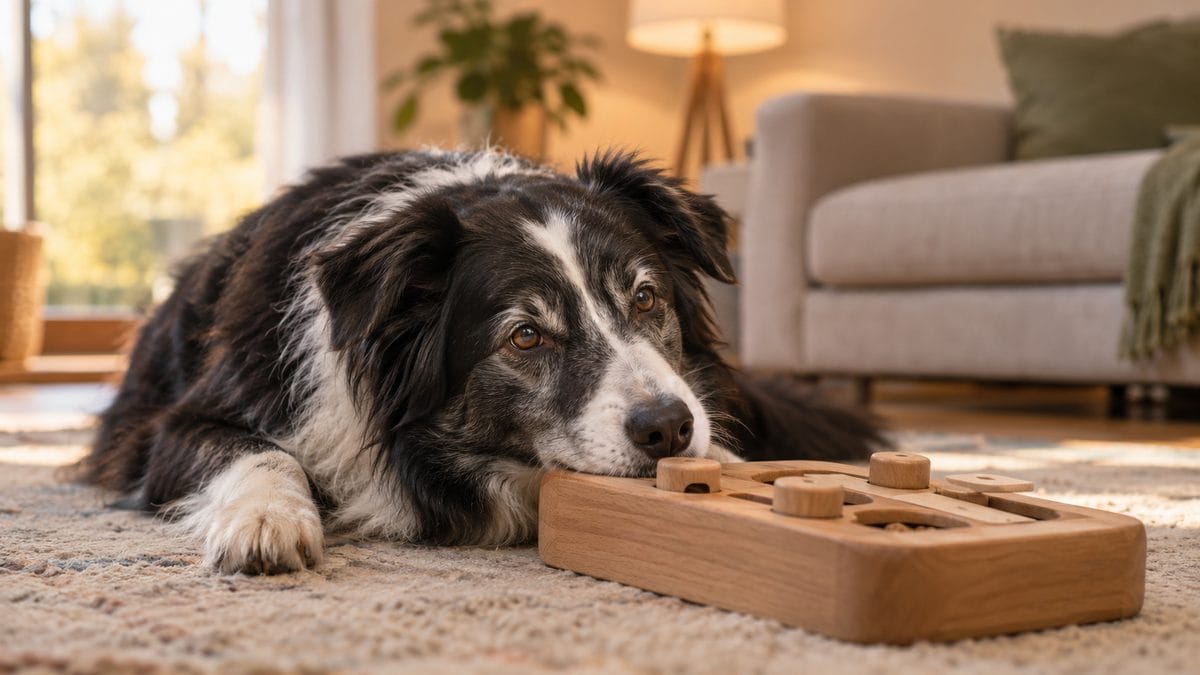
Your dog stands in the corner of the room as if he has forgotten why he walked there. He paces at night and misses cues he has known for years. If you have started searching for dog dementia supplements, you are far from alone: a 2001 study by Neilson and colleagues found signs of cognitive decline in about 28% of dogs aged 11 to 12, and in 68% of dogs aged 15 to 16.
The good news is that a few supplements and diets have real research behind them. The harder truth is that many products on the shelf have none. This guide walks through what the evidence actually supports, what to skip, and how to build a plan with your vet.
Quick Answer: Do Dog Dementia Supplements Work?
Some dog dementia supplements can help, but none cure the condition. The strongest evidence supports diets enriched with MCT oil and antioxidants, omega-3 fatty acids, and SAMe, with smaller studies behind blends containing phosphatidylserine. Results are usually modest and take 4 to 8 weeks to show. Supplements work best combined with mental enrichment, gentle exercise, and a vet check to rule out other causes.
Why Supporting an Aging Brain Matters
Canine cognitive dysfunction, often called dog dementia, is a slow, progressive change in how the brain works. According to Cornell’s Riney Canine Health Center, signs can appear from around nine years of age, and owners often miss them because they creep in gradually and look like ordinary aging.
Vets usually group the changes into a few areas: disorientation, changes in how a dog interacts with people, disrupted sleep, house-soiling, changes in activity, and new anxiety. If you are not sure whether what you see fits, our guide to the early signs of cognitive decline in senior dogs goes through each one.
Here is why timing matters. There is no way to reverse the damage once it happens, but the research that exists points the same way: dogs tend to respond best when support starts early, while the changes are still mild. Waiting until a dog is lost in his own home leaves far less room to help.
Supplements are only one part of that support. It is also worth knowing that pain, hearing loss, vision loss, thyroid problems, and other illnesses can look a lot like dementia. A dog who sleeps all day may be hurting, not confused, which is why a vet visit comes before any supplement plan.
The Dog Dementia Supplements With the Most Research Behind Them
The options below are listed roughly from the strongest evidence to the weakest. Most of the studies are small, and several were funded by the companies that make the products. That does not make them worthless, but it is a good reason to keep expectations realistic.
1. MCT oil and brain-protection diets
Medium-chain triglycerides (MCTs) are fats the liver turns into ketones, an alternative fuel for brain cells that no longer use glucose efficiently. In a 2018 double-blind, placebo-controlled study of 87 senior dogs with signs of cognitive dysfunction, dogs fed a diet with 6.5% MCT oil plus a “brain protection blend” improved in all six groups of signs after 90 days. Dogs on the control diet improved in four of the six.
Two details matter. First, the study tested a complete diet, not a spoonful of oil added to food, and it was run by researchers working with Purina, which makes the diet. Second, the blend also included fish oil, antioxidants, B vitamins, and arginine, so the MCT oil was not working alone. Several veterinary diets for brain aging are built on the same idea, and your vet can tell you whether one suits your dog.
Adding MCT or coconut oil yourself is a different matter. It adds a lot of calories and can cause diarrhea, so talk to your vet before you start, especially if your dog has a history of pancreatitis.
2. Omega-3 fatty acids (DHA and EPA)
DHA is a major building block of brain tissue, and fish oil was part of the brain protection blend in the study above. On its own, the evidence for omega-3s and canine dementia is promising but still limited. Fish oil also supports joints, skin, and heart health, which makes it one of the easier supplements to justify for a senior dog.
If you and your vet decide to try it, choose a fish oil made for dogs, such as Nordic Naturals Omega-3 Pet liquid fish oil, rather than a human capsule with added flavors or vitamins. We cover the research in more depth in our article on omega-3 and dog brain health.
3. SAMe (S-adenosylmethionine)
SAMe is a compound the body makes naturally. It plays a role in producing brain chemicals and in protecting cells from damage. In a placebo-controlled trial of 36 dogs over eight years old, 64.7% of the dogs given SAMe responded favorably after two months, compared with 36.8% on placebo. Owners reported the clearest improvements in activity and awareness.
The limits are real: the trial was small, short, and led by an employee of the company that makes the product. Still, it is one of the few controlled studies in client-owned dogs. For cats and small dogs under 12 pounds, Nutramax Denosyl tablets are a SAMe supplement the manufacturer describes as supporting both liver and brain health. For larger dogs, ask your vet which SAMe product and strength to use.
4. Antioxidant blends with phosphatidylserine
Phosphatidylserine is a fat found in brain cell membranes. Blends that combine it with ginkgo, vitamin E, vitamin B6, and resveratrol have improved short-term memory in laboratory studies of aged beagles, and Cornell lists one such product, Senilife, among the supplements that may help. Evidence in pet dogs at home is thinner.
Ginkgo can affect blood clotting, so this type of blend needs a vet’s input if your dog takes other medication or has surgery coming up.
5. Apoaequorin
Apoaequorin is a calcium-binding protein originally found in jellyfish, sold for dogs under the Neutricks brand. The studies behind it were commissioned by the manufacturer, and independent research is lacking. It may be worth discussing with your vet, but it belongs in the “possible” column rather than the “proven” one.
What About Melatonin, CBD and “Brain Support” Chews?
Night-time restlessness is one of the hardest parts of dog dementia, so it is natural to look for help with sleep. Some vets use melatonin for this, but the right product and amount depend on your dog’s size and medications, so it is not something to guess at.
CBD products are widely marketed for senior dogs. Research on CBD for canine dementia is very limited, and product quality varies widely, so we do not recommend them here.
Finally, be cautious with multi-ingredient “brain” or “longevity” chews. Many combine a long list of ingredients at low amounts, with no study on the finished product. A single-ingredient supplement with research behind it is usually a better place to start.
Practical Things You Can Do Alongside Supplements
In a two-year study of aged beagles published in 2005, the dogs that did best received both an antioxidant-enriched diet and regular mental and physical enrichment. Either one alone helped less. Supplements tend to work the same way: as part of a routine, not instead of one.
- Keep the brain busy every day. Short training sessions with known cues, scent games, and food puzzles all count. A beginner-friendly puzzle like the Outward Hound Nina Ottosson Dog Brick lets your dog work for part of a meal.
- Walk little and often. Two or three gentle walks a day, with time to sniff, give both exercise and new smells to process.
- Protect a predictable routine. Meals, walks, and bedtime at the same times each day reduce confusion and anxiety.
- Make the house easier to navigate. Keep furniture where it is, add night lights in hallways, and block stairs if your dog gets stuck or disoriented.
- Treat pain and other conditions. Arthritis pain can disrupt sleep and look like confusion. If your dog also moves stiffly, our guide on helping a senior dog with stiff legs has practical steps.
- Keep a simple log. Note sleep, accidents, and episodes of confusion each week. It makes it much easier for you and your vet to judge whether a supplement is helping.
What to Look for When Choosing a Dog Dementia Supplement
Not all dog dementia supplements are made to the same standard. This summary of the main ingredients can help you start the conversation with your vet:
| Ingredient | Evidence in dogs | Good to know |
|---|---|---|
| MCT oil + brain-protection blend (as a diet) | Placebo-controlled study in 87 pet dogs | Tested as a complete diet; extra calories if added to food |
| Omega-3 (DHA and EPA) | Supportive, but limited on its own | Also helps joints, skin and heart |
| SAMe | Small placebo-controlled trial in pet dogs | Size-specific products; ask your vet for larger dogs |
| Phosphatidylserine blends | Laboratory studies in aged beagles | Ginkgo may interact with some medications |
| Apoaequorin | Manufacturer-funded studies only | Independent research lacking |
Beyond the ingredient itself, look for:
- A product made for dogs, with clear amounts per tablet, chew, or teaspoon.
- The NASC Quality Seal, which shows the company follows the National Animal Supplement Council’s quality standards.
- Fewer, well-studied ingredients rather than long lists of low-dose extras.
- Honest claims. Words like “reverses dementia” or “cures” are a red flag.
Medication and Prescription Diets: What Your Vet Can Offer
Supplements are not the only option. Selegiline is a prescription medication approved for cognitive dysfunction in North America. The American Kennel Club notes that it can take four to six weeks to see whether it helps, and that it must not be combined with certain antidepressants. Your vet will decide whether it fits your dog’s health and other medications.
There are also prescription diets designed for brain aging, such as Hill’s b/d, Purina Pro Plan Veterinary Diets Neurocare, and Royal Canin Mature Consult. These need your vet’s recommendation, and many vets combine a diet, enrichment, and medication or supplements for the best effect.
When to See Your Vet
Book a vet visit before starting any supplement, and call sooner if you notice:
- Sudden confusion, circling, or head tilting that appears over hours or days
- Seizures, collapse, or loss of balance
- A dog who seems blind or deaf, or bumps into things
- New aggression, or anxiety that stops your dog from resting
- Loss of appetite, weight loss, or a big change in thirst
- Night-time pacing or crying that leaves your dog exhausted
Sudden changes are not typical of dementia, which develops slowly. They can point to other problems, such as vestibular disease, a brain tumor, or pain, that need prompt attention.
Veterinary Disclaimer: The information in this article is for educational purposes only and is not a substitute for professional veterinary advice. Always consult your veterinarian before starting any new supplement or health regimen for your pet.
Frequently Asked Questions
How long do dementia supplements take to work in dogs?
Most studies measured results after one to three months. In the SAMe trial, differences appeared from day 30, and in the MCT diet study the full results were measured at 90 days. Give any supplement at least 6 to 8 weeks before judging it, and keep a weekly log of sleep, accidents, and confusion so you have something concrete to compare. If nothing has changed after two to three months, ask your vet whether to stop it or try another approach.
Can I give my dog human fish oil or MCT oil?
Sometimes, but only with your vet’s guidance. Human fish oil capsules may contain flavorings or added vitamins that are not suitable for dogs, and the amount per capsule rarely matches what a dog needs. MCT and coconut oil add a lot of calories and can cause diarrhea. Pet-specific products make it easier to give a consistent amount, and your vet can help you choose one that fits your dog’s size and health.
Can supplements stop dementia from getting worse?
No supplement has been shown to stop canine cognitive dysfunction. The aim is to slow the decline and ease the signs, so your dog stays comfortable and engaged for longer. The best results in research came from combining several things: a brain-supportive diet or supplement, daily mental and physical activity, and treatment of other conditions such as pain. Starting early, while signs are mild, gives your dog the most benefit.
How long can a dog live with dementia?
Many dogs live for years after the first signs appear, especially when the condition is caught early and managed well. Dementia itself progresses slowly, and quality of life often depends more on other health problems and on how well sleep and anxiety are controlled. Our guide to how long senior dogs live covers the wider factors that affect lifespan in older dogs.
Final Thoughts
Dog dementia supplements are not a cure, but a few of them, used early and alongside daily enrichment, can help your dog stay more like himself for longer. MCT-enriched diets, omega-3s, and SAMe have the most research behind them, while many popular chews have none. Start with a vet visit to rule out other causes, choose one change at a time, and track what you see. If your dog’s sleep has been the first thing to change, our article on why a senior dog sleeps so much is a good next read.

Written by
The Senior Paws Editorial Team
The Senior Paws editorial team writes and updates every guide on this site. Each article is researched from veterinary and scientific sources such as the AKC, AVMA and VCA Animal Hospitals, and revised as guidance changes. Our goal is simple: to help owners understand what is happening with their older dog or cat, and to know when it is time to call the vet. We are not veterinarians, and nothing on this site replaces professional veterinary advice.